35 Fine Motor Activities for Preschoolers (Age-Wise Guide + Free Printables)
Fine motor activities for preschoolers are simple hands-on tasks — like playdough, threading beads, tearing paper, using tongs and tracing lines — that build the small muscles in the fingers, hands and wrists. Doing 10–15 minutes a day helps kids aged 3–5 get ready to hold a pencil, cut with scissors, button clothes and write their name.
Below you’ll find 35 easy activities sorted by age, a materials table, a simple weekly plan, and the signs that tell you a child is ready for pencil-and-paper work.
What Are Fine Motor Skills (and Why Do They Matter Before Writing)?
Fine motor skills are the small, controlled movements of the hands and fingers working together with the eyes. Gross motor skills use the big muscles (running, jumping, climbing); fine motor skills use the tiny ones.
These skills sit underneath almost everything a preschooler does at school:
- Pencil grip – holding a crayon or pencil with a tripod grasp
- Hand strength and stamina – writing for more than a minute without tiring
- Finger isolation – moving one finger at a time (pointing, pressing, pinching)
- Bilateral coordination – one hand holds the paper while the other draws or cuts
- Hand–eye coordination – placing a bead on a string or a crayon on a line
When a child struggles to write, the problem is often not the letters themselves — it’s weak hands. That’s why fine motor play should come before worksheets, not instead of them.
Which Fine Motor Skills Should a Preschooler Have at Each Age?
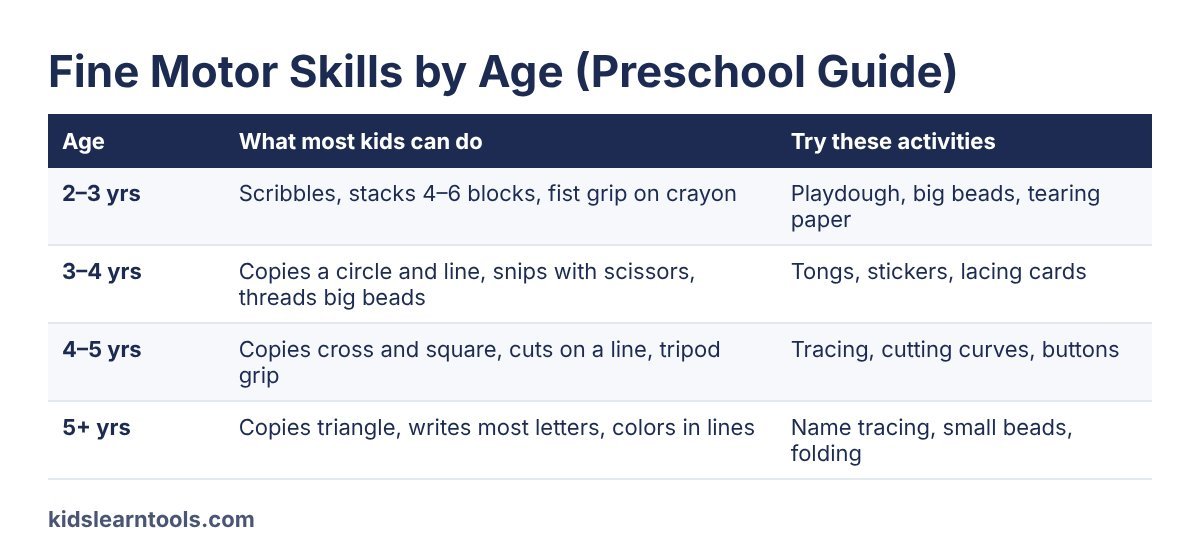
Every child develops at their own pace, but this table shows what most kids can typically do. Use it as a rough guide, not a test. For official milestone checklists, see the CDC’s developmental milestones.
| Age | Typical fine motor skills | Good activities to focus on |
|---|---|---|
| 2–3 years | Scribbles, stacks 4–6 blocks, turns book pages, uses a fisted crayon grip | Playdough squeezing, big chunky beads, posting coins into a box, tearing paper |
| 3–4 years | Copies a circle and a line, snips paper with scissors, threads large beads, starts a finger grip | Tong transfers, sticker peeling, lacing cards, cutting straight strips |
| 4–5 years | Copies a cross, square and some letters, cuts along a line, uses a tripod grip, draws a simple person | Tracing lines and letters, cutting curves, buttons and zips, writing their name |
| 5+ years | Copies a triangle, writes most letters, colors inside lines, ties a simple knot | Name tracing, small beads, origami folds, detailed coloring |
35 Fine Motor Activities for Preschoolers
Strengthening Activities (Build Hand Muscles)
These are the foundation. Strong hands make every other skill easier.
- Playdough squeeze and roll – roll snakes, balls and pancakes; hide small beads inside for kids to dig out.
- Spray bottle watering – water plants or “erase” chalk drawings with a spray bottle; the trigger works the whole hand.
- Sponge squeezing – move water from one bowl to another by soaking and squeezing a sponge.
- Clothespin clipping – clip pegs around the edge of a paper plate or a box.
- Tearing paper – tear old magazines into strips, then glue them to make a mosaic.
- Crumpling paper balls – one hand only, then toss them into a basket.
- Kneading dough – help knead roti or bread dough in the kitchen.
Pincer Grasp Activities (Thumb + Finger Control)
The pincer grasp is the “pinch” between thumb and index finger — the same grip used to hold a pencil.
- Sticker peeling – peel stickers and place them on dots or along a line.
- Pom-pom pick-up – pick up pom-poms one at a time and drop them into an ice-cube tray.
- Coin posting – push coins or buttons through a slot cut into a box lid.
- Pasta threading – thread penne or rigatoni onto a pipe cleaner.
- Tweezers and tongs transfer – move cotton balls, beans or small toys between bowls.
- Dot painting with cotton buds – dab paint on dots to fill a shape or letter.
- Picking up rice or lentils – sort a handful of mixed grains (with supervision).
Cutting Activities (Scissor Skills)
Always use child-safe scissors, and start with thick paper, which is easier to control.
- Snipping strips – single snips across a narrow strip of card.
- Cutting playdough – a great first cutting task because there’s no paper to tear.
- Straight-line cutting – cut along thick straight lines.
- Zigzag and curve cutting – move on once straight lines are easy.
- Cutting out simple shapes – circles, squares, then pictures.
- Fringe cutting – make a “lion’s mane” or “grass” from a paper plate edge.
Lacing, Threading and Building
- Lacing cards – punch holes around a card shape and lace with a shoelace.
- Bead stringing – start with big beads, move to smaller ones by age 5.
- Building blocks and LEGO – pressing pieces together builds finger strength.
- Nuts and bolts – twist large plastic nuts on and off.
- Buttons, zips and snaps – practise on a dressing board or old clothes.
- Opening and closing jars – a real-life wrist workout.
Pre-Writing and Tracing Activities
Once kids show a steadier grip, add tracing. Short, fun sessions beat long ones.
- Finger tracing in sand or salt – draw lines, circles and letters with one finger.
- Vertical surface drawing – draw on a whiteboard or paper taped to the wall; this strengthens the wrist and shoulder.
- Tracing lines and patterns – straight, wavy, zigzag and loop lines.
- Letter tracing – start with capital letters made of straight lines (L, T, E, H). Print practice sheets with our free Letter Tracing Worksheets tool.
- Mazes and pencil paths – follow a path from start to finish without touching the walls. Try our free printable mazes for kids.
- Name tracing – kids love writing their own name. Create a free custom sheet with our Name Tracing Worksheet Maker.
Everyday Life Activities
- Peeling a banana or orange – real-world finger strength.
- Pouring water – from a small jug into cups.
- Folding napkins or clothes – simple folds build bilateral coordination.
What Are Some Seasonal Fine Motor Activities for Preschoolers?
Kids stay excited when activities match the season or a holiday. These themed ideas use the same skills as the list above, so you can rotate them all year:
| Season | Fine motor activity ideas | Main skill |
|---|---|---|
| Fall / Thanksgiving | Sort pumpkin seeds with tweezers, thread cereal “apple” necklaces, make leaf rubbings with crayons, tear paper for a turkey’s feathers | Pincer grasp, threading |
| Halloween | Squeeze pumpkin playdough, peel and stick spider stickers on a web, use tongs to “rescue” toy spiders from a bowl | Hand strength, grip control |
| Winter / Christmas | Glue cotton balls on a snowman, thread beads on a pipe-cleaner ornament, “free” small toys frozen in ice cubes with a dropper of warm water | Pincer grasp, squeezing |
| Spring / Easter | Match and open plastic eggs, tear paper petals for a flower, plant seeds one at a time with fingers or tweezers | Finger isolation, bilateral coordination |
| Summer | Squirt water bottles at chalk targets, sort shells by size, trace letters in wet sand | Hand strength, pre-writing |
Rainy day tip: almost every activity in this guide works indoors. Keep a small “busy box” with playdough, pegs, stickers and a pair of tongs ready for days when kids can’t play outside.
What Materials Do You Need for Fine Motor Activities?
Most of these activities use things you already have at home.
| Material | Approx. cost | Skills it builds | Activities it’s used for |
|---|---|---|---|
| Playdough | Low / homemade | Hand strength | 1, 16 |
| Clothespins / pegs | Low | Pincer strength | 4 |
| Child-safe scissors | Low | Cutting, bilateral coordination | 15–20 |
| Pom-poms & ice-cube tray | Low | Pincer grasp, counting | 9 |
| Tongs / tweezers | Low | Grip control | 12 |
| Beads & pipe cleaners | Low | Hand–eye coordination | 11, 22 |
| Stickers | Low | Pincer grasp, finger isolation | 8 |
| Spray bottle | Low | Whole-hand strength | 2 |
| Chunky crayons / short pencils | Low | Tripod grip | 27–32 |
| Printable tracing sheets | Free | Pre-writing control | 29–32 |
Tip: Broken crayons are actually better than new ones. A short crayon naturally forces a tripod grip, because there’s no room for a fist.
How Much Time Should Kids Spend on Fine Motor Practice Each Day?
For preschoolers, 10–15 minutes a day is plenty. Little and often works much better than one long session. Here’s a simple weekly plan you can follow:
| Day | Focus | Example activities |
|---|---|---|
| Monday | Strength | Playdough + clothespins |
| Tuesday | Pincer grasp | Stickers + pom-pom pick-up |
| Wednesday | Cutting | Snipping strips + cutting playdough |
| Thursday | Threading | Pasta threading + lacing cards |
| Friday | Pre-writing | Sand tracing + one tracing worksheet |
| Weekend | Real life | Cooking, peeling fruit, buttons |
Stop while the child is still enjoying it. If they get tired or frustrated, that’s a sign the activity is too hard — go one step back.
Free Printable Fine Motor Activities Checklist
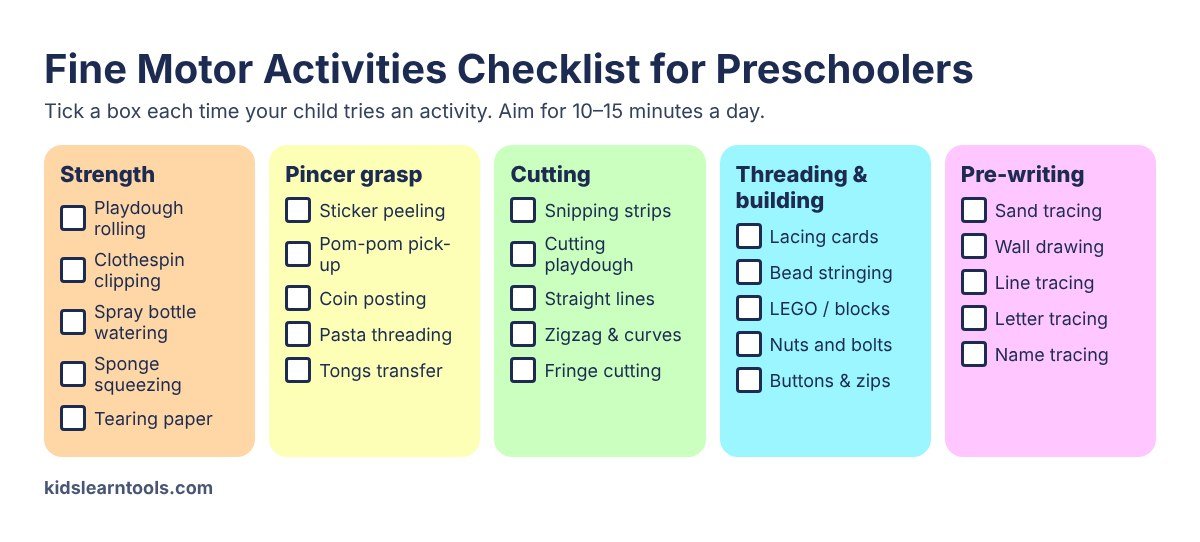
Print this fine motor activities checklist and stick it on the fridge or classroom wall. Kids tick a box each time they try an activity, which keeps practice fun and shows you which skills need more time.
When Is a Child Ready to Start Writing and Tracing Worksheets?
A child is usually ready for pencil-and-paper tracing when they can:
- Hold a crayon with fingers, not a fist
- Copy a vertical line, horizontal line and circle
- Use one hand as the “helper” to hold the paper still
- Sit and focus on a table task for 5 minutes
- Show a fairly consistent hand preference
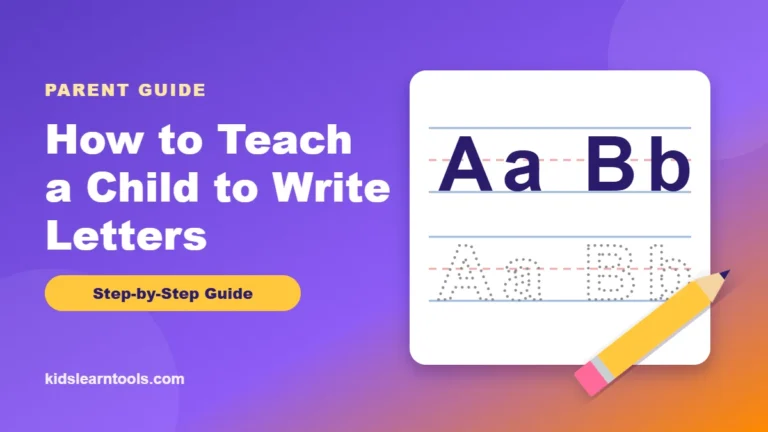
If these aren’t in place yet, keep going with play-based activities. When they are ready, follow our step-by-step guide on how to teach a child to write letters, and pair it with these letter recognition activities.
How Can Parents and Teachers Tell If a Child Needs Extra Help?
Some kids simply need more time. But talk to your child’s teacher or an occupational therapist if, by around age 4–5, a child:
- Still uses a fist grip on all writing tools
- Avoids drawing, coloring and building toys completely
- Gets tired very quickly during any hand task
- Can’t copy a circle or a straight line
- Switches hands constantly in the middle of a task
Getting support early makes a big difference, and the activities in this guide fit well alongside any therapy plan.
🍎 From My Classroom
In my eight years of teaching, many of the kids who came to me as “struggling writers” didn’t actually have a problem with letters — they had tired, weak hands. With one group, I paused worksheets completely for three weeks. We started every lesson with five minutes of playdough, peg clipping and tearing paper in small peer groups, where stronger kids helped the others. By the fourth week, their grip had improved so much that they were tracing their names with far more control — and, just as important, with confidence. My biggest lesson: build the hand first, then the handwriting.
Key Takeaways
- Fine motor skills are the small hand and finger movements kids need for writing, cutting and self-care.
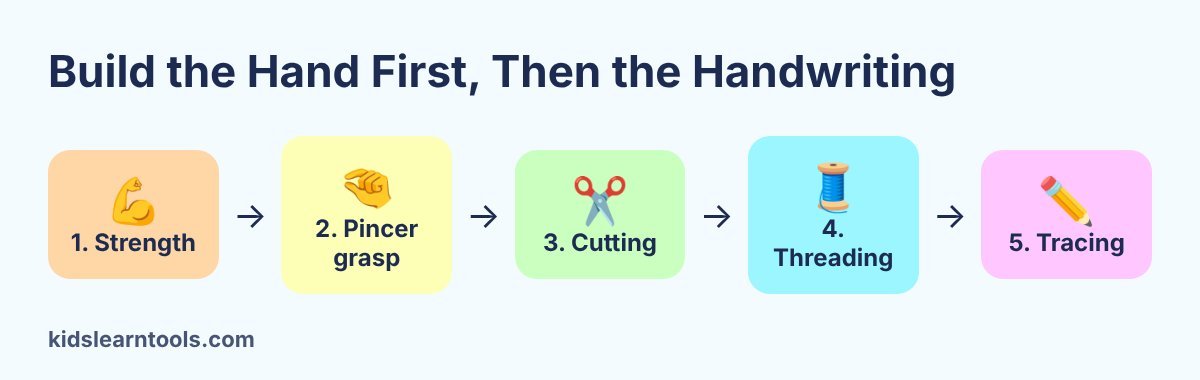
- Start with strength (playdough, pegs), then pincer grasp, cutting, threading and finally tracing.
- 10–15 minutes a day of playful practice is enough for preschoolers.
- Move to worksheets only when the child shows a finger grip and can copy basic lines.
- Use a free Name Tracing Worksheet Maker to make practice personal and fun.
Frequently Asked Questions
What are 5 examples of fine motor activities for preschoolers?
Five easy examples are playdough rolling, threading beads, peeling stickers, cutting paper strips with child-safe scissors, and tracing lines or letters. Each one strengthens the small hand muscles kids need for writing.
At what age do fine motor skills develop?
Fine motor skills develop from birth, but the big jump happens between ages 2 and 5. Most kids move from a fist grip to a finger grip around age 3–4, and many use a mature tripod grip by age 5–6.
How can I improve my child’s fine motor skills at home?
Use everyday items: playdough, clothespins, tongs, stickers, beads and spray bottles. Spend 10–15 minutes a day, rotate activities, and include real-life tasks like buttoning, pouring and peeling fruit.
Is coloring a fine motor activity?
Yes. Coloring builds pencil control, grip and hand–eye coordination. Short or broken crayons work best because they encourage a tripod grip.
Should preschoolers do tracing worksheets?
Yes, once they can hold a crayon with their fingers and copy simple lines. Keep sessions short (5–10 minutes) and mix worksheets with hands-on activities.
What is the difference between fine motor and gross motor skills?
Gross motor skills use big muscles for running, jumping and climbing. Fine motor skills use small muscles in the hands and fingers for tasks like writing, cutting and buttoning. Strong gross motor skills (especially shoulder strength) support fine motor control.