
25 Fun Letter Recognition Activities for Preschoolers (+ How to Teach It)
Before children can read or write, they need to know their letters — what each letter looks like, what it is called and what sound it makes. This skill is called letter recognition, and it is one of the strongest early predictors of reading success. The good news is that simple letter recognition activities can build this skill in just a few minutes a day.
The best part? Children learn letters fastest through play. Below you will find 25 fun letter recognition activities for preschoolers and kindergarteners, plus simple tips on how to teach letter recognition at home or in the classroom — most using things you already have.
Quick Summary
- Letter recognition means knowing a letter’s shape, name and sound.
- Most children learn letters between ages 3 and 5.
- Teach a few letters at a time, starting with the letters in your child’s name.
- Use activities that let kids see, hear, say and touch letters.
- Practice for 5–10 minutes a day and review often.
Table of Contents
What Is Letter Recognition?
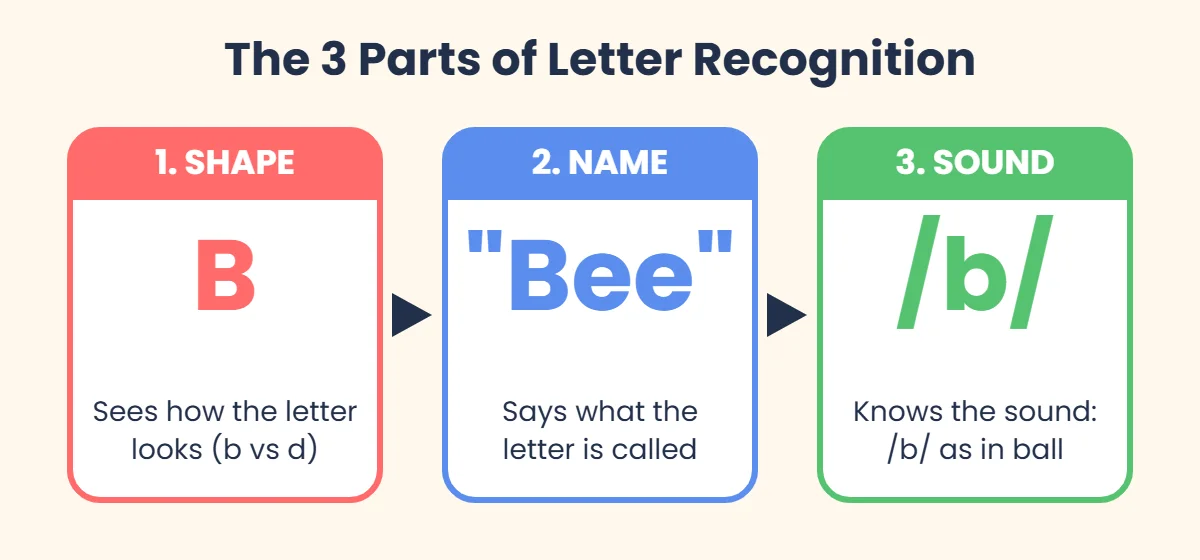
Letter recognition is a child’s ability to look at a letter and know which letter it is. It usually develops in three parts, and good letter recognition activities practice all of them:
- Letter shape: telling letters apart, like noticing that “b” and “d” face different ways.
- Letter name: saying “That is B” when they see the letter.
- Letter sound: knowing that B says /b/ as in “ball.”
Children also need to recognize both uppercase and lowercase forms. By the end of kindergarten, most children can name all 26 letters in both cases and say the most common sound for each one. You can learn more about alphabet knowledge and early reading from Reading Rockets.
When Should Kids Learn Letter Recognition?
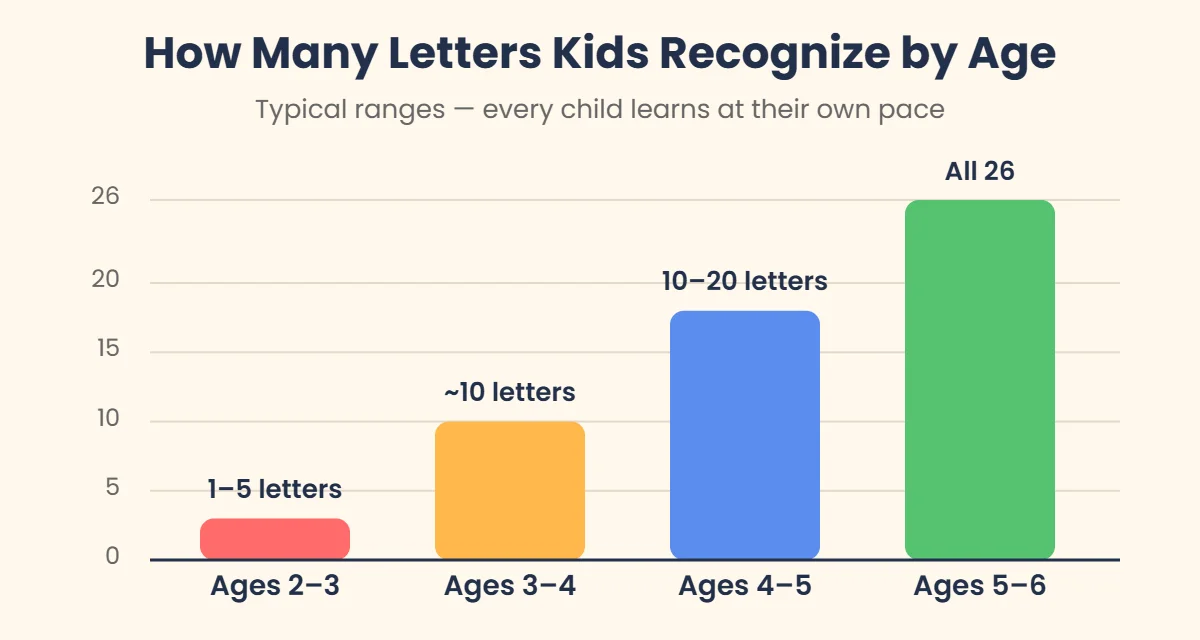
- Ages 2–3: children start noticing letters and may recognize the first letter of their name.
- Ages 3–4: many children know 10 or more letters, especially uppercase.
- Ages 4–5 (Pre-K): most know a majority of uppercase letters and are learning lowercase and sounds.
- Ages 5–6 (Kindergarten): children are expected to recognize all letters and their sounds.
Every child learns at their own pace. If your child is learning more slowly, keep practice playful and short — steady, happy practice works better than pressure. Choose letter recognition activities that match your child’s level, and move on when they feel confident.
How to Teach Letter Recognition: 6 Simple Tips
- Start with their name. The letters in a child’s own name are the most meaningful, so they are remembered first.
- Teach a few letters at a time. Two or three new letters a week is plenty. Keep reviewing the old ones.
- Separate look-alike letters. Do not teach b and d, or p and q, in the same week.
- Connect each letter to a picture word. “A is for apple” gives the brain a hook to remember the shape and sound together.
- Use many senses. Let children see, say, hear and touch letters — not just look at flashcards.
- Review little and often. Five minutes a day beats an hour once a week.
From My Classroom
In my classroom, I have seen that young children learn letters best when they can see, hear and practice them. I often use colorful letter cards, simple pictures and fun activities.
One technique that works well is asking children to say the letter aloud, recognize its shape and connect it with a familiar word — for example, “A” for “Apple.” Repeating this helps children remember the letter more easily. Children also learn at different speeds, so I encourage every child with kind words and keep learning fun and stress-free.
— Shagufta Aslam, M.Ed, 8 years of teaching experience
25 Fun Letter Recognition Activities for Preschoolers
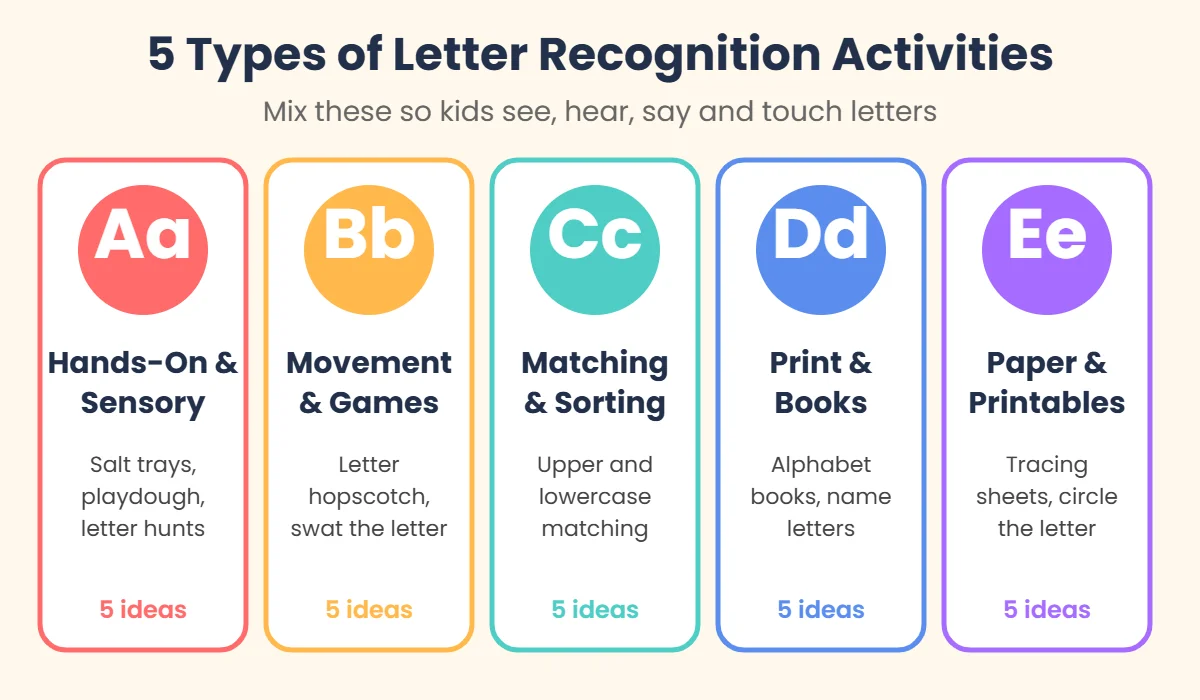
Hands-On and Sensory Activities
- Letter sensory bin: hide magnetic or foam letters in rice, beans or sand. Kids dig one out and name it.
- Playdough letters: roll “snakes” and shape them into letters, or press letter stamps into the dough.
- Sand or salt tray writing: trace a letter with a finger in a tray of sand, then shake to erase.
- Letter shaving cream: spread shaving cream on a table and draw letters in it.
- Build-a-letter: make letters with sticks, pipe cleaners, Lego bricks or buttons.
Movement and Game Activities
- Letter hopscotch: write letters in chalk squares; children say each letter as they hop on it.
- Swat the letter: tape letters to a wall, call out a letter and let your child swat it with a fly swatter.
- Letter treasure hunt: hide letter cards around the room and ask your child to find “B.”
- Musical letters: place letters on the floor, play music, and when it stops your child names the letter they land on.
- Letter bean bag toss: toss a bean bag onto a letter mat and say the letter and its sound.
Matching and Sorting Activities
- Uppercase–lowercase match: match “A” to “a” using cards, clothespins or puzzle pieces.
- Picture–letter match: match a letter to pictures that start with its sound (B → ball, bear, bus).
- Letter sorting: sort letters into groups: straight lines, curves, or letters in my name.
- Letter memory game: play memory with pairs of matching letter cards.
- Mystery letter bag: put a foam letter in a bag, let your child feel it and guess the letter.
Print and Book Activities
- Alphabet books: read ABC books together and point to each letter as you say it.
- Letter hunt in books: find all the “S” letters on one page.
- Environmental print: spot letters on cereal boxes, road signs and shop names.
- Name puzzles: cut your child’s name into letters and rebuild it.
- Letter of the week: focus on one letter with a craft, a snack and a book that starts with it.
Paper and Printable Activities
- Dot the letter: use bingo daubers or stickers to cover every “M” on a page.
- Color by letter: color each space by the letter written inside it.
- Letter tracing: trace each letter while saying its name and sound. Make free sheets with our Letter Tracing Worksheet Maker.
- Circle the letter: find and circle a target letter in a row of mixed letters.
- Alphabet coloring pages: color a big letter and a picture that starts with it.
Letter Recognition Activities for Kindergarten
Kindergarteners can handle slightly bigger challenges. Try these letter recognition activities for kindergarten to stretch their skills:
- Letter sound race: say a sound and see who can find the matching letter first.
- Beginning sound sort: sort picture cards by their first letter.
- Rainbow letters: write a letter three times in different colors while saying the sound.
- Build simple words: use magnetic letters to make CVC words like cat, sun and dog.
- Writing practice: once kids recognize letters, help them write letters correctly with our step-by-step guide on how to teach a child to write letters.
Which Letters Should You Teach First?
There is no single “correct” order, but these approaches work well for most children and fit easily into your daily letter recognition activities:
- Letters in your child’s name — the most motivating place to start.
- High-frequency letters like s, a, t, p, i and n, which make many simple words (sat, pin, tap).
- Easily different letters — avoid teaching look-alikes (b/d, p/q, m/w) close together.
- Uppercase first, then lowercase — uppercase letters are easier to tell apart, but lowercase letters appear far more often in books.
Common Letter Recognition Problems and How to Help
- Mixing up b and d: use the “bed” trick — make fists with thumbs up; the left hand is “b,” the right hand is “d,” and together they look like a bed.
- Knowing the song but not the letters: point to each letter while singing the ABC song slowly.
- Forgetting letters quickly: review old letters daily and add new ones more slowly.
- Losing interest: switch to a movement game or sensory activity, and keep sessions short.
- Recognizing uppercase but not lowercase: practice uppercase–lowercase matching games every day.
If a child shows very little progress by the end of kindergarten despite regular letter recognition activities, talk to their teacher or pediatrician. Extra support early can make a big difference.
Frequently Asked Questions
What is the best way to teach letter recognition?
The best way is to teach a few letters at a time using multisensory letter recognition activities — seeing, saying, hearing and touching letters — and to connect each letter to a familiar picture word. Short daily practice and frequent review help children remember.
How many letters should a 4-year-old recognize?
Many 4-year-olds recognize around 10–20 letters, often uppercase letters and the letters in their name. There is a wide normal range at this age.
Should I teach letter names or letter sounds first?
Teach them together. Saying “This is B, and it says /b/ like ball” helps children link the shape, name and sound at the same time.
How long does it take to learn all the letters?
Most children learn all uppercase and lowercase letters over 1–2 years of preschool and kindergarten. Teaching two or three letters a week with regular review and short letter recognition activities works well.
Are letter recognition worksheets helpful?
Yes, when combined with hands-on play. Worksheets like letter tracing and “circle the letter” give practice, while games and sensory letter recognition activities make learning stick.
Make Letter Recognition Activities Fun
Letter recognition does not need expensive materials — just a few minutes of playful practice every day. Pick two or three letter recognition activities from this list, start with the letters in your child’s name, and celebrate every new letter they learn.
Want a quick printable to go with your letter recognition activities? Create free letter practice pages in seconds with our Letter Tracing Worksheet Maker.
